
My 10 favorite tools for agent relations in 2026
Ten tools I use weekly for agent relations work in 2026, starting with Claude Code. Some polished, some rough-edged, all of them changed how I work.
Developer relations is going through an identity shift. We're not building for human developers alone anymore — we're building for AI agents that discover, evaluate, and integrate APIs on behalf of those developers. I've started calling this work "agent relations," and the toolchain I rely on looks nothing like it did 18 months ago.
These are my 10 favorite tools for doing agent relations work in 2026. I use them daily or weekly to write content, run events, track developer signals, and ship skills that automate the repetitive parts of DevRel. Some are polished products. A few are rough-edged experiments. All of them have changed how I work.
Coding and agent skill creation
Claude Code
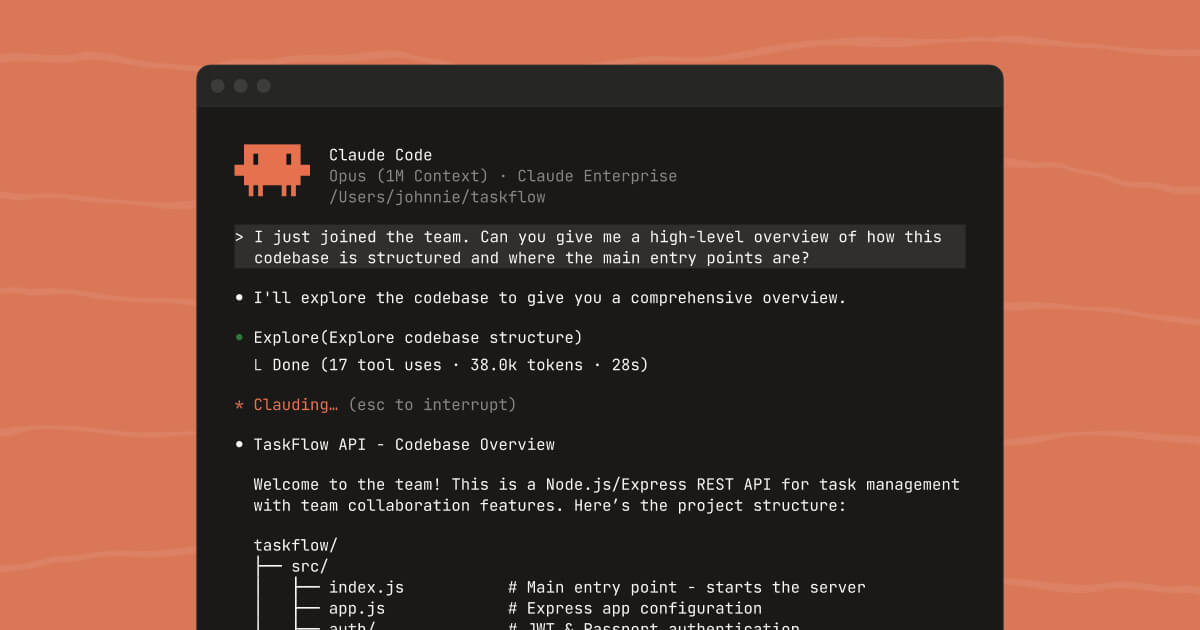
Claude Code is the center of gravity for everything I build. It's an agentic coding tool that lives in your terminal, understands your codebase, and handles everything from writing code to managing Git workflows through natural language.
I use it heavily — not just for traditional development, but for creating and running custom skills that automate DevRel workflows: blog writing, copy editing, call-for-paper submissions, sentiment analysis, newsletter generation, and most of the "admin" that eats into advocacy time. Each skill is a markdown prompt that Claude Code runs as a composable, repeatable task.
Run a custom skill from the terminal
claude /devrel-skills:blog-write "Testing OAuth 2.0 flows in Postman"
Chain skills together
claude /devrel-skills:sentiment-apitools
I run it inside VS Code most of the time using the Postman VS Code extension alongside Claude Code's own VS Code integration. But the terminal-first philosophy is what makes it composable — you can pipe logs into it, run it in CI, or chain it with other tools.
Worth noting: Emdash deserves a shoutout here. It's an open-source agentic development environment (YC W26) that lets you run multiple coding agents in parallel, each isolated in its own Git worktree. I suspect the era of AI in traditional IDEs — or even traditional terminals — is fading fast.
Agentic developer environments
This is a brand-new tool category. Think of it as a terminal designed specifically for running and orchestrating AI coding agents.
Agentastic
Agentastic is a native macOS app that lets you run 30+ AI coding agents in parallel. Each agent operates in its own isolated Git worktree or Docker container, with a built-in IDE, Ghostty terminal, and browser. The killer feature is the built-in diff viewer — you can review agent changes like you're reviewing a PR, using Claude, Codex, or CodeRabbit for automated code review.
It's free, with no sign-up required. You bring your own agent subscriptions (Anthropic, OpenAI, Google, JetBrains) and pay vendors directly.
Acepe
Acepe takes a different approach — it's a unified desktop interface built on the Agent Client Protocol (ACP), an open standard under the Linux Foundation that standardizes communication between code editors and coding agents. Connect to ACP-compatible agents like Claude Code, Codex CLI, Gemini, and goose in a single workspace. You get unified context, parallel running, and production-grade workflows from plan to PR.
The ACP angle is what makes this interesting long-term. As the protocol matures (editors like Zed, Neovim, and Marimo already support it), you get flexible agent replacement — swap agents in production systems without rebuilding your workflow. I'm still early in my evaluation, but the "one pane of glass for every agent" concept is compelling.
Kanban-style agent orchestration
The kanban coding pattern is emerging fast. Aperant gives you AI-powered terminals with one-click task context injection and the ability to spawn multiple agents for parallel work. Cline Kanban takes it further — you break down work on a kanban board, assign tasks to agents, and watch them run next to a real-time diff of changes. You can leave comments like you're reviewing a PR while agents run.
Both are open source, and they feel like the future of how we'll manage agent workflows.
Screen and video recording
Tella
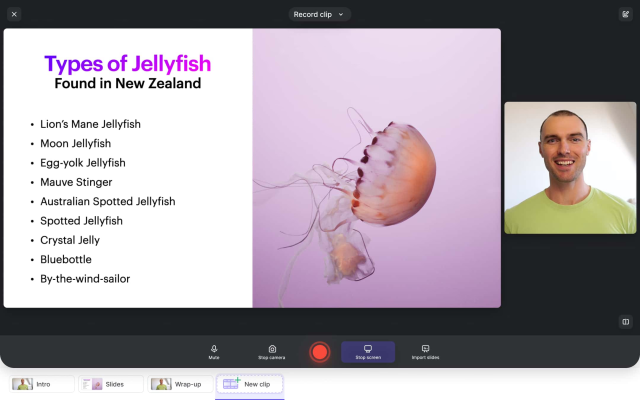
Tella is solving a real pain point for developer advocates: creating polished demo videos without a video editing degree.
I've been a fan of Screen Studio for a while, but it lacked the AI editing capabilities I wanted — things like auto-removing filler words, editing video by editing a transcript, and managing multi-layout recordings. Tella handles all of this. The core approach is recording in short, manageable clips that you rearrange and polish, rather than one long take you have to cut down.
Early results are promising, though I'm still confirming audio and video quality hold up for conference-quality recordings. The AI transitions and auto-chapter features are particularly useful for tutorial content.
Pricing: Pro starts at $12/month (billed annually) with unlimited recording, AI editing, and 4K export.
Community management and PLG signals
Common Room
I've used Common Room for years. It's strong for understanding developer community engagement — aggregating signals from GitHub, Slack, Discord, and X into a single view. It helps you identify engaged community members, track onboarding patterns, and understand where your DevRel team should focus.
That said, it's been leaning harder into sales pipeline territory lately, which shifts it away from the pure community intelligence that originally made it valuable.
Reo.dev
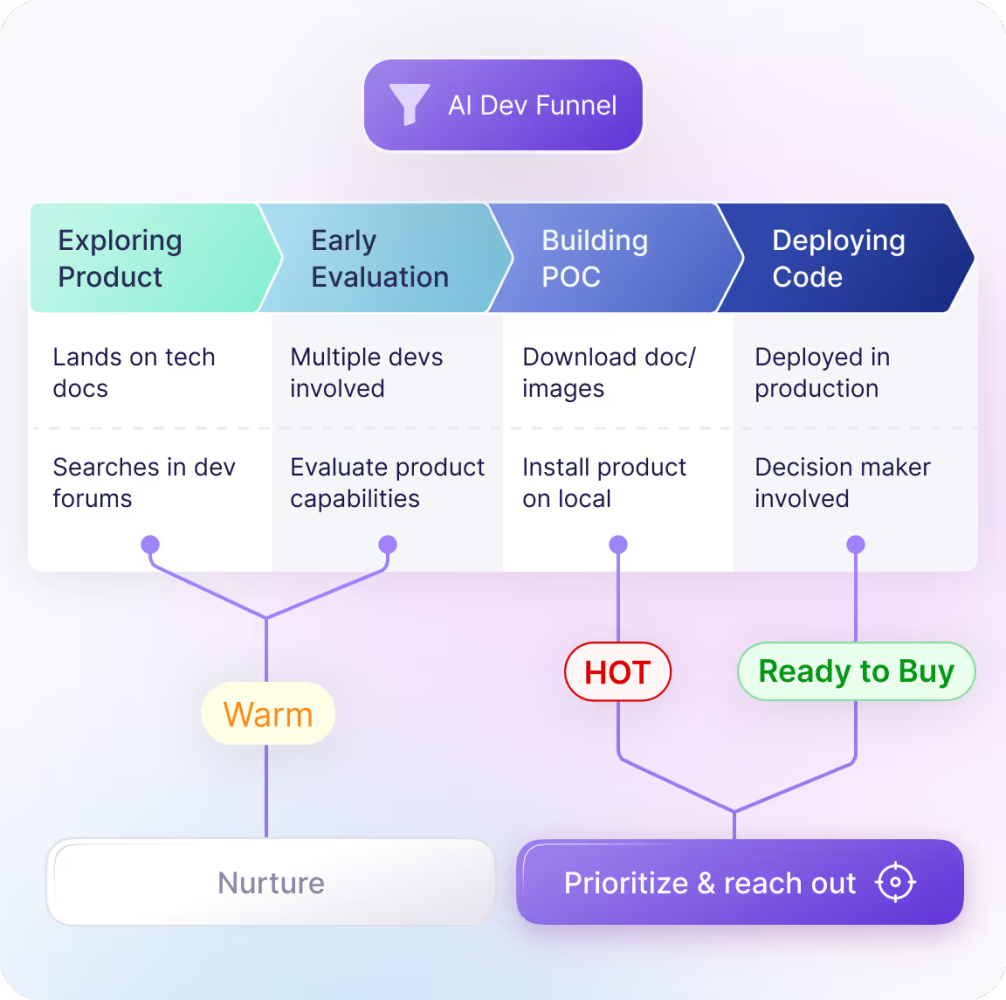
Reo.dev is where I've been experimenting for developer signal intelligence that truly drives product-led growth. It tracks 625M+ developer activity signals — package installs, code interactions, cloud sign-ups, community activity — and turns them into actionable GTM playbooks.
The differentiator is its native integrations with developer-centric platforms: GitHub, package managers, technical documentation, and product telemetry. Over 200 companies, including LangChain and Temporal, use it. If your GTM motion is PLG-first, this feels like the right direction.
Product instrumentation
PostHog
PostHog is indispensable. It mixes product analytics, web analytics, session replay, error tracking, feature flags, and experimentation into a single open-source platform. I use it on MyCaminoGuide.com for everything from tracking user journeys to monitoring API performance.
What makes PostHog particularly relevant for agent relations is its LLM analytics capabilities. You can track token usage, model performance, latency metrics, and conversation quality for LLM implementations. They're actively building deeper span-level observability for complex agent workflows — multiple LLM calls, tool invocations, RAG pipelines, and MCP orchestration layers — all connected to your product analytics data.
That combination of product instrumentation and agent observability in one stack is hard to find anywhere else.
Event management
Luma
Luma is fantastic for developer events. My team and I built the Agents and APIs community to over 6,000 members in less than 6 months using it. The sign-up, check-in, and feedback experience is smooth, and the community dashboard makes sending newsletters and updates straightforward.
The API integrates with Zoom and other tools, and the guest chat feature creates genuine community engagement around events. About 2 million people sign up for events on Luma every month, and its user base grew 5x between 2023 and 2024.
I still think there's a big opportunity to build a developer community events platform that ties everything back to PLG — connecting event attendance to product adoption signals. But for now, Luma handles the event logistics better than anything else I've tried.
Task management
Notion
My preference here is lightweight. Notion with tables and databases is all I need to track team activity. Creating workflows and triggers is straightforward, and the 24/7 agents feature means activities can run autonomously — generating summaries, updating statuses, and routing tasks without manual intervention.
No complex project management tool required. Tables, databases, a few automations, and you're set.
Voice-first development
Wispr Flow
Who has time to type these days? Wispr Flow lets you talk to any app. It's the only dictation tool I've found with native integrations for coding IDEs — Cursor, Windsurf, VS Code — making "vibe coding" a real workflow. Dictate natural language instructions to AI coding assistants, and Flow handles grammar, punctuation, and style automatically.
The accuracy is impressive. There's even a vibe coding mode that understands variable names, camelCase, technical jargon, and developer-specific terminology. Developers report hitting 175+ words per minute when dictating code specifications, commit messages, documentation, and PR descriptions.Blog drafts, Slack messages, and Linear tickets get the same treatment. Once you get used to voice-first development, typing feels slow.
Agent training and context
Jina Reader
Jina Reader converts any URL to clean markdown — perfect for giving AI agents the context they need. Prepend any URL with r.jina.ai/ and you get LLM-friendly content with navigation, ads, and sidebars stripped away.
My CLAUDE.md includes a rule to always prepend web URLs with r.jina.ai/ when fetching reference material. It's a paid service, but the free tier is generous enough for most workflows.
Other tools in this space worth exploring: Monkt for similar URL-to-markdown conversion, and the fetch MCP server if you want the same capability as an MCP server integration.
Just for fun
Lil Agents
Sometimes you need something to brighten your day. Lil Agents gives you tiny animated AI companions — Bruce and Jazz — that live above your macOS dock. Each has their own Claude session and mini chat window. They walk, think, and vibe while you work.
Is it productive? Debatable. Does it make a long coding session more enjoyable? Absolutely.
The bigger picture: from DevRel to agent relations
These tools reflect a deeper shift in what developer advocacy looks like. As Patrick Chanezon writes, DevRel is being reinvented across three dimensions:
-
Helping developers become productive managers of agents — teaching context engineering, specification-driven development, and quality assessment rather than hands-on coding
-
Optimizing Agent Experience (AX) — making your APIs, docs, and services discoverable by AI agents through machine-readable formats like llms.txt, clean OpenAPI specifications, and MCP server implementations
-
Transforming DevRel workflows — using agents to automate content generation, repository maintenance, and community feedback synthesis
The tools in this post map directly to these dimensions. Claude Code and the agentic IDEs handle dimension 1. PostHog's agent observability and Reo.dev's developer signals tackle dimension 2. And everything from Wispr Flow to Jina Reader to my custom Claude Code skills addresses dimension 3.
We're not replacing developer relations. We're expanding it. And the toolkit is evolving fast.
Subscribe
New posts on AI, developer relations, photography, and the odd long walk, straight to your inbox. No spam.